

The Case on Addiction
The Eight Questions That Reveal What Modern Life Is Actually Doing to You

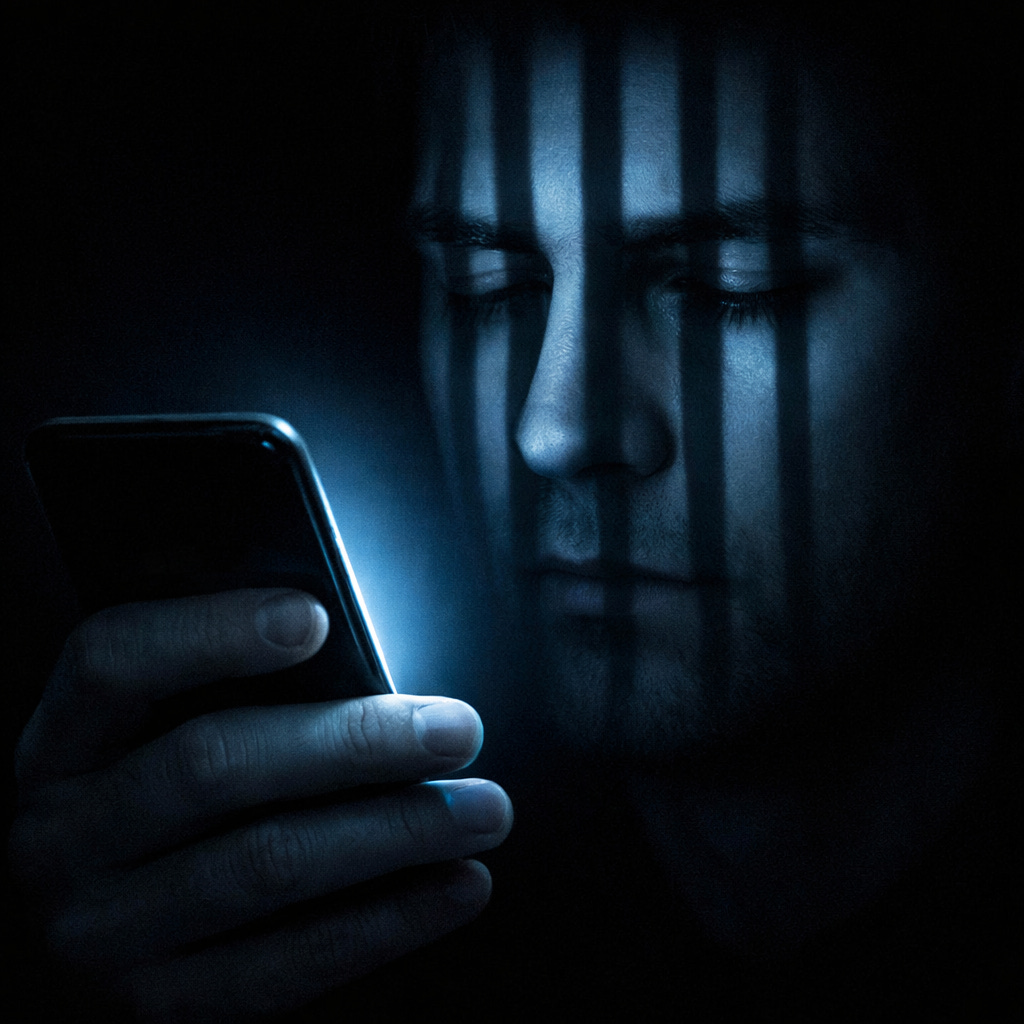
Last week, Mark Zuckerberg began testifying in a Los Angeles courtroom in what is being called one of the most significant tech trials in recent memory.
The plaintiff, a young woman known only as Kaley, claims that platforms like Meta, Instagram, and TikTok damaged her mental health over a decade of use. Starting on YouTube at 6, Instagram at 11, Snapchat at 13, and TikTok at 14, Kaley — now 20 — says social media changed the course of her childhood.
What makes this claim more unique than previous ones is that the defendant states the corporations knew what they were doing. Currently, companies cannot be held liable for what is posted on their platforms under Section 230 of the Communications Decency Act (CDA). The Telecommunications Act states:
“No provider or user of an interactive computer service shall be treated as the publisher or speaker of any information provided by another information content provider.”
Therefore, if a user posts it, the platform technically doesn’t publish or own it. Therefore, the platform isn’t liable for it.
So what’s happening is that the prosecution is coming from a different angle, which is that these companies knew their platforms made people addicted, and they did it anyway. The defense argues that the information presented is not a straightforward conclusion. It is a pieced-together narrative based on certain things, events, releases, and so forth.
What makes this litigation even more interesting is that it is a bellwether case. For background, a bellwether is a test case or leading indicator that signals what’s likely to follow. The term originally comes from sheep herding, as the bellwether was the lead sheep in the flock, identified by the bell around its neck. Where the bellwether went, the rest of the flock followed.
In legal contexts, a bellwether case is specifically a trial that’s selected to be heard first among a large group of similar cases. The outcome of that first trial signals how the rest of the cases are likely to be decided. It sets the tone, the precedent, and often determines whether the remaining plaintiffs settle or push forward.
Currently, there are over 2,000 plaintiffs in related cases, including 1,200 school districts, all going after TikTok, Meta, Snapchat, and YouTube.
This trial is groundbreaking in so many and it ties into society in so many ways. But, to start, what we are going to do is discuss the phenomenon of addition. One of the pieces I read summarized this trial like big tobacco litigations of the past, so there may be some overlap.
So, without further ado — and with so many ways for us to dive into this Zuckerberg trial — let’s start with the basics:
What is addiction?
In this article, you’ll learn:
Why the Zuckerberg lawsuit matters beyond the courtroom — and what it reveals about how addiction is legally and medically defined
The hidden criteria that determine whether something qualifies as a “real” addiction — and why the DSM classification system holds more power than most people realize
Why gambling changed everything we thought we knew about what it means to be addicted
How ordinary behaviors like binge-watching, overworking, and news consumption meet the clinical definition of addiction — and we call them “normal”
The metaphysical dimension of addiction: how compulsion hijacks the heart, steals your attention, and becomes mind control by another name
A few facts worth knowing of the Telecommunications Act:
It was originally written to protect early internet forums and bulletin boards — at a time when there were roughly 40 million internet users worldwide. Today, there are over 5 billion.
It has been called “the 26 words that created the internet” — a phrase coined by law professor Jeff Kosseff, who wrote a book by that name.
It gives platforms two protections: immunity from liability for third-party content, and immunity for good-faith moderation decisions (removing or restricting content).
It has been used successfully to shield Facebook, YouTube, Twitter/X, TikTok, and virtually every major platform from lawsuits over user-generated content for nearly 30 years.
It does not protect platforms from federal criminal law, and it does not protect them from their own content or their own design decisions — which is precisely the gap the Zuckerberg prosecution is exploiting.
Laying the Land on Addiction
If you’re new here, one of my works you should read to get up to speed is my article on reclassification. In it, I show how the identification of a disease from a medical standpoint is key to making any condition either disappear or reappear. I use the case study on SIDS as the perfect example — how, based on how deaths are classified, you can make a condition appear or disappear. The diagnosis and the technicalities of something are important, and we saw this play out with the pandemic.


So, for this, we are going to discuss the definition of addiction.
Addiction is identified as a pattern of behavior that includes the following criteria, evaluated over time:
Are you using it more than intended?
Have you made repeated efforts to cut back and failed?
Do you experience intense cravings?
Do you spend excessive time obtaining or engaging with it?
Are you neglecting your responsibilities?
Are you continuing despite clear harm to yourself or others?
Do you need more of it to get the same effect?
Do you experience withdrawal when you stop?
These are the eight questions used to determine whether someone is addicted. A lot of times, there is a chemical foundation to addictions, as we hear in conversations regarding dopamine, for example. But as we’ll see, this criterion is very appropriate not only for what addiction is, but also for how lifestyles can be addictive as well.
From a medical perspective, addiction primarily refers to substance use — what is known as Substance Use Disorder, or SUD. About 90% of classified addictions are grouped under SUD. But what is interesting is that we do have one condition that meets the diagnosis criteria for addiction, and yet it is not a substance. And that is gambling.
Gambling meets all of the criteria listed above and is the only behavioral addiction that is different from substance use. For the first time, we have the ability to show that addiction doesn’t have to be chemical. It can essentially the effects and severity of patterns of behavior.
And I think that’s very interesting.
Compulsion, Habits, and the Hijacked Mind
What we are really talking about when we talk about addiction is a habitual pattern of behavior — your mind just knows to do this.
I’ve written about this in my article on habitats, and the idea behind habitats is that when we do things out of habit, they become habitual, reinforcing what I call the mind.
For more background, I also have my esoteric and metaphysical conversations on speaking to the aether and on how to view our bodies in different ways using topics like visualization, and this model of how to view the world is very accurate because it fits the framework we’re working through here today.


We’re talking about metaphysical principles here: from habits to being habitual, to being part of your mind, to using your mind’s eye to visualize. We’re no longer in Kansas anymore. This is a more accurate way to understand your body, your mind, and the force of compulsion.
At the point of compulsion, there’s a lack of intention. Your mind, your habits, and your habitats look to do this on their own. We can classify addiction at its deepest level as compulsion.
Now, from a legal standpoint, technically speaking, one cannot say social media is an addiction solely because there is no DSM diagnosis for it. The only way they would be able to win a case like this is if the DSM were to reflect that social media addiction is a true diagnosis. Again, this is why you have to understand reclassification. This is how the world operates.
But from a common-sense perspective, we all know these things can be addictive. The argument now is — which isn’t even being discussed at the trial — is addiction different than habit-forming? From the argument I’ve laid out, you can say that anything that changes your pattern and behavior, anything that is habitual — which some could say is mind control — anything that is compulsory, can be seen as addicting. So even though we don’t have a DSM for it, it sounds like we can say social media is addictive.
What Else in Modern Life Is an Addiction?
When you begin to look at the criteria for addiction and realize that gambling — because it fits these criteria without involving a substance — qualifies, the next question becomes: what else can be addictive in our society?
And when you arrive at that question, that is when you begin to see the revelation for the society we’re in.
Side note — I had the pleasure this weekend of working on the podcast with Reframing the Narrative, PJ, and Jake —great guys. If you haven’t seen our first episode, watch it here.
We just recorded the second one, so I’m looking to share that with you all as soon as it’s released. On that podcast, we briefly touched on this topic, and the point was that life becomes a lot easier when you realize that the society you were told about was wrong. And once you see that, you realize you’re living in a hell on earth. That’s where I come in with the introduction: “Hi — Welcome to hell. I’m your host, Franklin. Let me show you how you live in a world where your society, your technology, and everything looks to extract from you without you even knowing it.”
As we discussed this truth, we left with the understanding that once you realize the illusion placed around us, once you’re able to see it, it’s like stepping out of Plato’s cave. You begin to see: I can make heaven right here.
It’s that simple, once you have the right information. Which is what we’re here to do.
Now, back to the question: if addiction is really due to compulsion and these criteria, there are a lot of things that can fall under this.
Binge-watching fits all of the criteria, and it’s something that millions of Americans do. We have a phrase for it — being a couch potato — and it’s considered normal, even though it is extremely unhealthy to the body. Overworking fits the criteria as well. People ignore their health, ignore their families, and even though there’s a reward tied to success, you can absolutely go overboard. News consumption. Day trading. The stock market. There are many things we consider normal that fall into this compulsion territory.
And as I was looking and evaluating all of these things, I realized the majority of them have to do with technology. So you start to put the connection together: is technology addicting by its very utilization?

What we call modern life, what we call the use of technology, is addictive and it’s harmful. This is the truth of reality. It is an unorthodox truth. And I’ll include myself here. Substack is a wonderful social media platform, and I’m able to use it to spread this work. But if you’re not careful, you can fall into all eight of these traits. Scrolling for an article while driving. Making a comment while driving — something I do all the time. This can be an addiction.
Author’s Note: I want to pause here because an argument could be made for overworking, day trading, binge-watching, etc. As we also talked about this on the podcast, the same thing that creates can also destroy. Let’s take murder: if someone comes into my house and threatens my family, I am justified in using force to protect them, and that is right. However, if I were to do the same thing outside of that context, that is wrong. The act itself can be good or bad depending on the conditions. Same thing with sex: when done within the right relationship, it is a positive, life-giving thing. When done in a context where it is not warranted, it is negative.
The same thing that creates can be used to destroy. So we cannot just say that these things — aspects of our daily lives that society normalizes — are good because there are many negatives that come with them.
Power Flows, Force Compels
As I look to close this article, I want to bring in the framework from David Hawkins and his book Power vs. Force, because I think it ties everything together.
There are always two paths. And most of those decisions come down to whether you are being powerful or forceful. We’ve talked about gold and silver before — gold representing our time, silver representing our attention. I’ve come to realize that you always want gold first. The heart creates the largest electromagnetic field, and there is this connection between time, the heart, and gold that forms a very metaphysical image of the world.
Power flows. You can flow and be very powerful. One of the best ways to describe this is martial arts, with your power being in your flow. And when you look at force, forcing things, one of the biggest takeaways from this whole article is that force is compulsion. It forces you. You may not want to, you may not intend to, but it forces you. There’s a compulsion to it.
What we’re seeing in society is that the heart and coherence are flipped, with attention now leading. The head is leading the heart. And a lot of times in this physical world, the attention gets hijacked to the point where it becomes part of our habits, becoming habitual.
This is modern-day mind control. And it is happening right now.
Closing Thoughts
So, to close, the biggest takeaway from this is: are you being compelled but consider it normal? Are you addicted, but it feels acceptable simply because everyone else is doing it too?
This is something to sit with, and we’ll continue to talk more about this case in the next piece, where we’ll look specifically at how corporations look to steal your time. Whether it looks like your leisure or your productivity, what they want is your time.
Takeaways
Addiction is defined by behavioral patterns, not just chemical dependency — and most people don’t know this
Gambling’s inclusion in the DSM as a behavioral addiction set a legal and medical precedent that applies directly to the social media conversation
Behaviors like binge-watching, overworking, and compulsive news consumption meet or approach the clinical criteria for addiction — we simply haven’t named them as such
Technology, as a category, is likely the most widespread addiction vector in modern society — and it’s been deliberately designed that way
The distinction between power and force maps directly onto the distinction between habit and compulsion — one flows, one drives
Action Items
Run your routines through the 8-point diagnostic. Pick 2-3 daily behaviors and honestly evaluate them against the addiction criteria. Not to shame yourself — to see clearly.
Track your attention. For one day, note every time you reach for your phone, open social media, or flip on something to watch. Was it intentional, or automatic?
Read “Reclassification” — Franklin’s earlier piece on how disease classification determines what gets recognized as real, and what disappears.
Ask the question: What am I doing out of force rather than power? And what would it look like to move from one to the other?
As always, thank you for your time and attention.
Have a great and wonderful day.
—Ashe,
Franklin O’Kanu
If you enjoyed this work and gained value from it, support more work like this by becoming a paid subscriber for $5/month
If you’re already aware but want to take a step toward becoming the best human you can be, you can check out my guide.
11 Insights for Being The Best Human This 50-page guide is the clearest map I’ve created for navigating the madness of modern life. It blends ancient wisdom, spiritual clarity, and grounded daily ritual — helping you remember who you are and why you’re here.
If the world feels off, this guide will confirm why — and help you take back control.
Support Unorthodoxy!
If this article opened your eyes, there’s more behind the paywall. Exclusive, in-depth pieces that go deeper, challenge more, and reveal the truths they don’t want us to see.
🔑 Become a paid member and gain access to premium and archived articles, exclusive podcasts, and thought-provoking chats you won’t find anywhere else.
📖 Prefer a comprehensive take? My book, An Unorthodox Truth, is a fact-based journey through 200 years of deception—a must-read for those seeking clarity in a manipulated world.
☕ Feeling generous? Leave a simple tip to support this work—every bit helps me continue creating meaningful content.
“Modern day mind control. And it’s happening right now “. I hope I got the quote right as I didn’t go back to check it. But your statement there is so true. And unfortunately, the majority cannot see it, but the overlords can, the evil one can and definitely knows how to use it. These addictions and their use have been around for eternity, but unfortunately, with technology – – just like compound interest – – it’s being used at a unsurmountable amount. I find this quite fitting as I’m in Leviticus going over Jehovah and his constant employment of his laws and his rules to make it a habit on his people – – to make us set apart. Everything is habit both good and bad.
Another excellent enlightenment of an article, great use of words.
Coach Bear The Urbanfarmboy
Great article - the disease of addiction wears many hats. Our Creator holds the Power & Soulution - 12 Step programs work. Blessings & gratitude to the Truth Warriors ...