

Bring Back Common Knowledge
Five truths that should be common sense in the 21st century

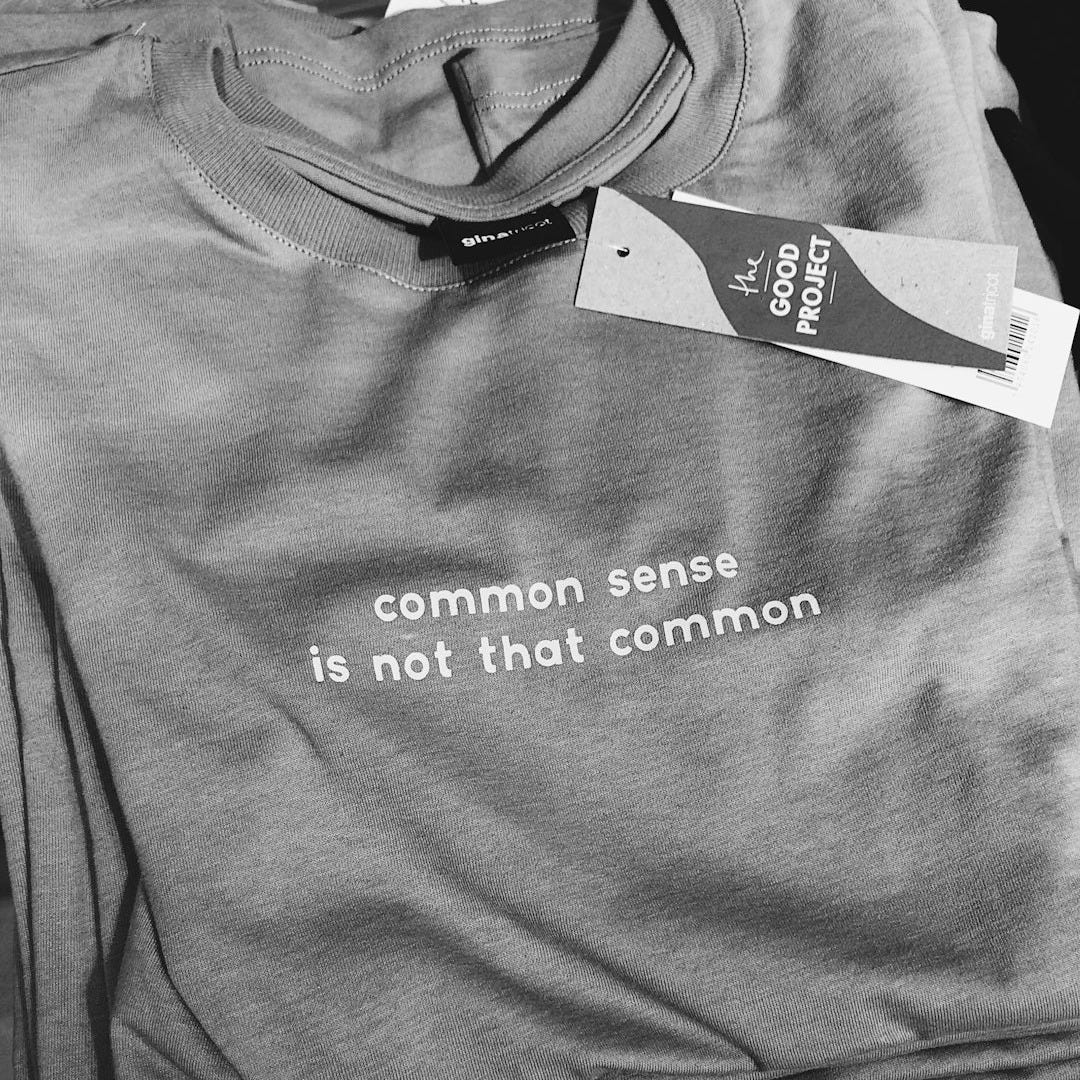
The other day at Church, as the Pastor was talking about seeing the best in people, she used the example of the different generations.
When speaking about the young people, she mentioned that they need to be taken care of because they have a lot of energy, but they’re the future of humanity.
When it came to old people, she mentioned that we need to spend more time with them because they have something that’s not abundant anymore: common sense.
This stuck with me for a while because one could argue that as a society, we no longer have common sense. As the pastor said, common sense was what allowed them to live a long life.
Common sense was part of what allowed older generations to navigate life, survive hardship, raise families, and live as long as they have. They did not have access to unlimited information, search engines, social media, artificial intelligence, or experts commenting on every possible subject.
Yet somehow, they knew how to live.
I agree with this in a sense. Common sense allows you to gauge what steps to take, what directions to go, etc. Common sense is like this “societal inner knowing” — that’s just common sense.
Common sense is knowledge so obvious, practical, and deeply understood that it does not require a scientific study, a government official, or an algorithm to explain it to you.
It’s just common sense.
Could it be that us younger generations, Generation X and below, have lost this ability of common sense? I’d argue that is the case.
I’d argue that this is the case, but I’d also argue that we’ve lost something else, something known as common knowledge.
Common Knowledge
Common knowledge is the knowledge that is understood throughout a society. It is the collection of basic truths, lessons, warnings, and principles that most people within a culture recognize.
However, in our current society, the knowledge that most have isn’t true knowledge; it’s manufactured, institutional, algorithmic knowledge: you know what the algorithm wants you to know.
You know what the media repeatedly places in front of you. You know what corporations pay to advertise. You know what institutions approve. You know what appears on the first page of a search engine. But that does not necessarily mean you know the truth.
In an attempt to fix this, I want to introduce what I call: Common Knowledge That Everyone Should Know. This is knowledge that is out there, but it’s not common.
Most of it has been buried beneath propaganda, public relations, advertising, algorithms, institutional authority, and the endless amount of information competing for our attention.
The modern person has access to more information than any generation before but possess less practical wisdom about how the world actually works.
This is not accidental.
The rulers of society benefit when people do not understand the systems governing their lives. Corporations benefit when you do not understand their incentives. Institutions benefit when you outsource your judgment.
A population without common knowledge becomes dependent. It becomes dependent on the experts to explain reality, dependent on corporations to provide solutions, dependent on technology to think, and dependent on institutions to determine what is true.
If certain truths were to become common knowledge — and eventually common sense — people might begin making different decisions, or better yet, the people may begin planning revolt.
This is why we need to make this common knowledge common sense so it can begin to change the culture.
In my article on Culture, I talk about how to change the world; we have to change the culture.
Culture is defined as the beliefs, customs, arts, etc. of a particular social group, place, or time. One of the beliefs that we have to change about our culture is this overall idea that everything is fine.

Things may appear to be going well. You may have food, shelter, entertainment, technology, and access to more conveniences than any civilization before us. But convenience does not mean freedom and comfort does not mean peace.
And progress does not mean that you should stop paying attention.
You still need to remain mindful of what is being covered up. You need to be mindful of the traps, incentives, and deceptions placed in front of you.
You need to know some common knowledge.
Below are the first five pieces of common knowledge I could think off while working on this piece. Let’s dive into these:
In This Article, You’ll Learn
Why the loss of “common sense” across younger generations points to something deeper—a manufactured, algorithmic knowledge that’s replaced true knowing
The five pieces of common knowledge the Ruling Class doesn’t want to become common sense
How corporations that answer only to the dollar shape the health, technology, and information you consume daily
Why taking back authority over your own body is one of the most radical acts available to you
How to hold two truths at once: things are genuinely getting better, even as the media profits from your fear
1- Vaccines Don’t Work.
Vaccines have been the saviors in the medical institution for decades. They’ve been untouchable, so much so that every single child is mandated to have one — immediately — after birth. The only thing is that vaccines don’t work.
I’ve covered this in depth, but the COVID pandemic has really opened the door to the fallacies of vaccinology. And with the former Health Voice for the nation pleading the fifth and refusing to speak on the most recent pandemic, and with the failures and side effects and mortality occurring on humanity, as a culture, you need to understand that vaccines don’t work, never did, and contribute more to sickness and disease than anything else.


As a culture, you should understand that vaccines fail, can cause harm, and can be influenced by the same institutional and financial incentives found throughout the rest of medicine.
Whether discussing vaccines, medications, surgeries, or any other intervention, common sense should tell you that no product given to millions of human beings should ever be protected from honest questioning.
2- Public Corporations value money over humanity.
This should be a no-brainer, but the amount of propaganda, PR, commercials, etc., that these corporations use means most people truly love corporations.
The amount of propaganda, advertising, public relations, sponsorships, branding, and commercials created by corporations means that many people develop emotional relationships with companies that primarily view them as users.
Are there some good ones out there? Sure. There are good employees, leaders, products, and companies attempting to operate ethically.
But if publicly traded, most corporations answer to the dollar, and that is their only calling: how to increase the value of the stock.
Its primary calling is to increase revenue, protect market share, satisfy shareholders, and raise the value of its stock. As long as it can get away with it, a corporation will often do whatever it can to increase profit.
This is important to note because corporations and institutions are what make up our world. We like to think it’s a democracy, but the lobbying and rules show differently.


Common sense requires us to understand the incentives of the institutions asking for our trust, time, and attention.
3- You should know what’s wrong with your body and how to fix it.
The first two can be health-related — especially health corporations — and that’s how we get here to number three. If corporations only prioritize the bottom dollar, what benefit is there in curing your condition when it can be managed?
A cured patient no longer require a products, but a managed patient can remain a customer for decades.
This does not mean that every doctor, nurse, pharmacist, or healthcare worker is intentionally attempting to keep people sick. Most healthcare professionals genuinely want to help.
The problem is that they operate inside systems shaped by guidelines, reimbursement models, corporate interests, time limitations, pharmaceutical influence, and institutional protocols.
Before these corporations made guidelines that now run the health of millions, the health of the individual was their own. Sure, I’m referring to a time beyond modern cities, but this common sense remains: you are over your own body.
This does not mean that you know everything or rejecting every doctor or diagnosing every condition yourself. It means using the medical system to obtain as much useful information as possible while refusing to surrender your judgment entirely.
You should be able to know what’s wrong, what the diagnosis is, what the ache and pain are, etc.


Ultimately, you should be in control of your health — it is your body, so you have to deal with the consequences before trusting such a decision to someone who has no impact if things go awry
4 - Cellphones are horrible and ChatGPT can make you dumber.
This has to do with technology, as society has accepted these advancements into daily life without properly assessing their impacts. We were so amazed by what the technology could do that we rarely asked what the technology might do to us.
Well, the time has come, and we can see their impacts.
Cell phones are horrible, social media will entrap you and waste your time, and LLMs can make you dumber.
Cell phones are utility devices, yet we carry them around us as if they are our lifelines. Social media was meant to connect, but we follow more people than we actually know; it’s an advertising machine. And LLMs can provide you with a lot of information, but if you become lazy and only rely on LLMs, you will get dumber.
Technology is great and can help us do amazing things, but from points 1 through 3, and now this one, this could be to your demise, while corporations continue to rake in profits.


Common sense requires understanding that a tool can be useful while still being dangerous.
5 - Things are better, but the media wants you to live in fear.
There’s a running theme here: corporations and health. This is the world that we find ourselves in. Now, fortunately, things are actually better than is being told. People are living longer. Emergency medicine can save lives. There is more information out there — and more opportunities as well.
Life is actually getting better.
But it can be difficult to recognize this when the media constantly places corruption, violence, conspiracies, disasters, political conflict, disease, and fear directly in front of you.
Yes, there is corruption, conspiracies, institutions lying, powerful people manipulating society, etc.
But there is also beauty. There is family. There is creativity, spiritual growth, opportunity. There are people helping one another every day without appearing on the news.
Both realities exist at the same time. Things can be bad while life remains incredibly good.
It should become common knowledge that the media profits from keeping your nervous system trapped in a state of fear. Fear captures attention, creates engagement, and ultimately keeps you watching.
Common sense requires learning how to recognize the darkness without allowing the darkness to consume your perception of reality.
Pay attention to what is wrong, but reflect on what is good.

Closing Thoughts
These five are my initial thoughts on common knowledge that should be common sense within the culture. I’m sure you have some yourselves.
I’d love to hear from you. Let me know what additions — or subtractions — you’d add to this list.
Takeaways
The knowledge most people hold today isn’t true knowledge—it’s algorithmic knowledge, curated by the same rulers who benefit from keeping you uninformed.
Changing the world means changing the culture, and changing the culture starts by making buried truths common again.
The through-line connecting vaccines, corporations, technology, and media is a single incentive: money over humanity.
Reclaiming authority over your own body and mind is the practical starting point—use the system for information, but stay in control.
Discernment cuts both ways: the media profits from fear, but the honest truth is that life is genuinely getting better.
Next Action Items
Pick one of the five and pressure-test it yourself this week. Don’t take my word for it—go find the primary sources and see where the “common knowledge” breaks down.
Audit your own algorithmic knowledge. For one day, notice how many of your “obvious” beliefs came from a feed rather than from lived experience or firsthand research.
Reclaim one area of your health. Request your own records, ask for the actual diagnosis and numbers, and start building a file that you—not a corporation—control.
Put the phone down for a set block each day and let your own mind do the work the LLM or the feed usually does for you.
Revisit my article on Culture to go deeper on why changing the culture is the real lever for changing the world.
As always, thanks for the time and attention. Have a great and wonderful day.
— Ashe,
Franklin O’Kanu
If you’ve enjoyed this work as a paid member and you’re ready to change the world, upgrade to become a Founding Member
If you’re already aware but want to take a step toward becoming the best human you can be, you can check out my guide.
11 Insights for Being The Best Human This 50-page guide is the clearest map I’ve created for navigating the madness of modern life. It blends ancient wisdom, spiritual clarity, and grounded daily ritual — helping you remember who you are and why you’re here.
If the world feels off, this guide will confirm why — and help you take back control.
Support Unorthodoxy!
If this article opened your eyes, there’s more behind the paywall. Exclusive, in-depth pieces that go deeper, challenge more, and reveal the truths they don’t want us to see.
🔑 Become a paid member and gain access to premium and archived articles, exclusive podcasts, and thought-provoking chats you won’t find anywhere else.
📖 Prefer a comprehensive take? My book, An Unorthodox Truth, is a fact-based journey through 200 years of deception—a must-read for those seeking clarity in a manipulated world.
☕ Feeling generous? Leave a simple tip to support this work—every bit helps me continue creating meaningful content.
"Outsource your judgment." Some form of this idea has been bouncing around my dome for the last few years. I have a fascination of (maybe disdain for) how many people seem to seek an "expert" in whom to outsource their *thinking* (trust "the science!"). Perhaps my disdain is for the mere idea of an "expert."...at least the modern version.
There are also too many stovepiped paths (traps?) for our best and brightest where they only learn the curated information deemed relevant for their specific field. Some are arrogant enough to think they have the whole picture and only their opinion or those of others who have spent years focused in one area of study are the only ones which matter...these folks seem to attract the feeble minded outsourcers in a self-reinforcing ecosystem of ignorance.
A lot of MDs seem to fall into this category. That has to be by design. Some are sharp / curious / observant enough to break free from the narcissism of intelligence mindtrap because they open up their information aperature wide enough to realize how full of shit or blissfully negligent they are of conflicting information directly relevant to their "expertise." A lot of archaeologists and historians also fail here, it seems.
True experts will always be needed, but their curated information feed needs to be scrutinized and de-emphasized by a more classical approach to education successful in creating the thinkers of old. Institutions which control them (AMA, AAP, etc.) need to be neutered as they are too easily corrupted / controlled by those with interests counter to humanity.
Love this bro 👌🏽